 Technical Material · Agribusiness
Not all agricultural limestone is the same. The dolomitic type corrects pH and also supplies magnesium — a nutrient lacking in much of Brazil's soils. Understand PRNT, the Ca/Mg ratio and why fineness defines the speed of correction.
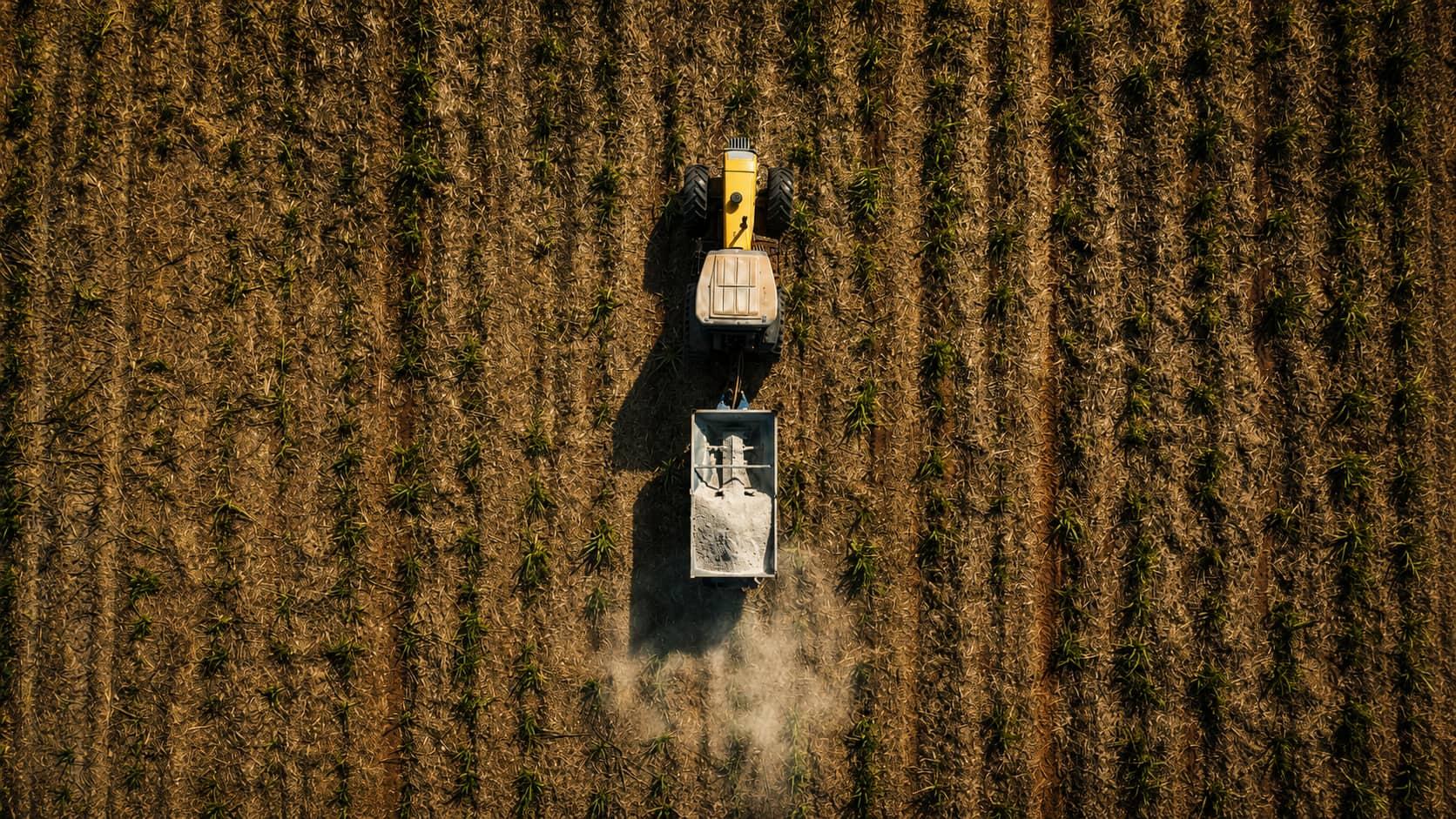
Liming is the cheapest and most profitable soil-management practice — and yet it is where many growers get the product choice wrong. The difference between calcitic and dolomitic limestone is no label detail: it is the presence of magnesium.
Why the dolomitic type
Dolomitic limestone contains both calcium and magnesium carbonate. As it corrects acidity — neutralizing toxic aluminum and raising base saturation (V%) — it also replenishes magnesium, an essential nutrient that is deficient in much of tropical soils. In a soil with low Mg and an unbalanced Ca/Mg ratio, using calcitic limestone corrects the pH but deepens the magnesium shortage. The dolomitic type solves both in a single machine pass. Paraná's liming criteria (the NEPAR-SBCS manual) guide this choice by the soil analysis.
PRNT: the number that tells the truth
PRNT (Total Relative Neutralizing Power) combines chemical purity (PN) with fineness (RE, reactivity). Two limestones with the same carbonate content can have very different PRNT if one is finer than the other. Buying limestone by the price per tonne without looking at PRNT is buying blind: a low-PRNT material requires a higher rate for the same effect, and the freight on the "weak" tonne eats up the apparent saving.
Fineness defines the speed
The finer the particle, the faster the limestone reacts and corrects the soil — but the faster it is also spent. The right fineness balances a fast response with residual effect. For no-till, where the limestone stays on the surface, the choice of fineness and the application management have particulars that the technical analysis must consider.
Uncalcined — it is the ground rock
The agricultural corrective is dolomitic rock crushed and ground, not calcined. Quality lies in the purity of the rock (PN), the fineness (RE) and consistency from batch to batch. There is also the use of oxides (lime) and agricultural gypsum for specific situations — gypsum, for example, does not correct surface acidity, but it carries calcium and sulfur into the subsurface, working where limestone does not reach. Each has its place; the mistake is treating them as interchangeable.
Our corrective line delivers dolomitic limestone with XRF analysis per batch — purity and fineness proven, not estimated — and short logistics from central-south Paraná. For the grower, that means a predictable rate and the magnesium the soil calls for, with no surprise in the next analysis.
Want to apply this to your operation?
Nova Ita’s engineering team helps define the right specification for your process in the agribusiness segment.